




BÜRKLE Membrane Vacuum Presses and Compatible Membranes
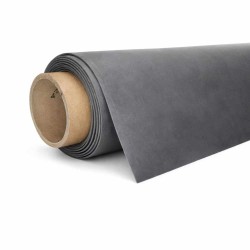
- Thickness: 3.0 mm
- Width: 1700 mm
- Length: 3300 mm
- Hardness: 40 Shore A
- Area of application: Veneer, foil, paper pressing.
- Compatibility: BÜRKLE MULTIFOILER BTF 1432.
The Role of the Membrane in BÜRKLE Membrane Vacuum Presses
In BÜRKLE membrane vacuum presses, the membrane is the main working element that comes into direct contact with the workpiece. Under vacuum, the membrane provides even pressure distribution and precise reproduction of the part’s shape.
The membrane’s properties directly affect:
- surface quality of the finished product;
- accuracy of geometry reproduction;
- absence of defects during coating;
- process stability during long production cycles.
Rubber Membranes for BÜRKLE Membrane Vacuum Presses
Rubber membranes are used in BÜRKLE membrane vacuum presses for cold and moderately heated pressing processes. They are applied in veneering and laminating furniture components where high elasticity and mechanical resistance are required.
Rubber membranes effectively compensate for height differences and complex workpiece geometry, ensuring uniform pressure without local overloads.
Silicone Membranes for BÜRKLE Membrane Vacuum Presses
Silicone membranes are used in BÜRKLE membrane vacuum presses operating at elevated temperatures. They are required for thermoforming, PVC film pressing, and other thermoplastic material applications.
Silicone retains elasticity and stable physical properties at high temperatures and during repeated deformation cycles, enabling high-quality 2D and 3D parts without loss of shape accuracy or surface quality.
Selecting a Membrane for BÜRKLE Membrane Vacuum Presses
When selecting a membrane for a BÜRKLE membrane vacuum press, it is recommended to consider:
- pressing temperature;
- type of coating material;
- part geometry;
- operating mode and production intensity.
A properly selected rubber or silicone membrane allows full utilization of BÜRKLE membrane vacuum presses, improves process stability, and reduces the risk of defects.