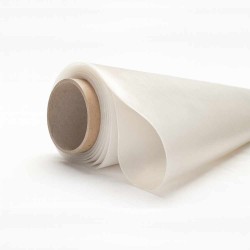


Silicone Membranes for Vacuum Presses — High-Temperature Solutions for Demanding Industrial Applications
Subcategories
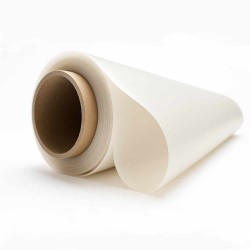
- Thickness: 1.0 mm
- Width: 1600 mm
- Length: On request, minimal 1 m
- Hardness: 40 Shore A
- Area of application: Veneer pressing, wood bending, composites.
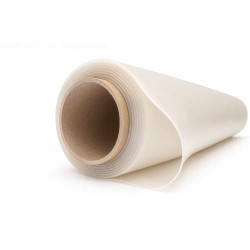
- Thickness: 2.0 mm
- Width: 1600 mm
- Length: 3550 mm
- Hardness: 40 Shore A
- Area of application: Veneer pressing, wood bending.
- Compatibility: ADAMIK AP-350/161 S.
- Thickness: 2.0 mm
- Width: 500 mm
- Length: 500 mm
- Hardness: 40 Shore A
- Area of application: Kydex, composites, DIY
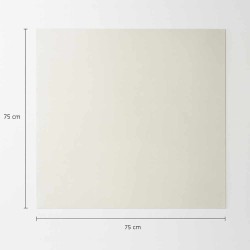
- Thickness: 2.0 mm
- Width: 750 mm
- Length: 750 mm
- Hardness: 40 Shore A
- Area of application: Kydex, composites, DIY
- Thickness: 2.0 mm
- Width: 1600 mm
- Length: 3050 mm
- Hardness: 40 Shore A
- Area of application: Veneer pressing, wood bending, composites.
- Compatibility: ARTEX VPS.
- Thickness: 2.0 mm
- Width: 1600 mm
- Length: 2900 mm
- Hardness: 40 Shore A
- Area of application: Coating of PVC foil, veneer pressing, wood bending, composites.
- Compatibility: ISTRA-A VPF-2-2600.
- Thickness: 2.0 mm
- Width: 1600 mm
- Length: 3050 mm
- Hardness: 40 Shore A
- Area of application: Veneer pressing, wood bending, composites.
- Compatibility: ISTRA-A VPR-3000.
- Thickness: 2.0 mm
- Width: 1600 mm
- Length: 3200 mm
- Hardness: 40 Shore A
- Area of application: Coating of PVC foil, veneer pressing, wood bending, composites.
- Compatibility: ISTRA-A VPF-2-3000.
- Thickness: 2.0 mm
- Width: 1600 mm
- Length: 3050 mm
- Hardness: 40 Shore A
- Area of application: Veneer pressing, wood bending, composites.
- Compatibility: ISTRA-A VPS-3000.
- Thickness: 2.0 mm
- Width: 1600 mm (5,4 ft)
- Length: 3050 mm (10 ft)
- Hardness: 40 Shore A
- Area of application: Veneer pressing, wood bending, composites.
- Compatibility: Vac-U-Clamp SP-10500.
- Thickness: 2.0 mm
- Width: 1600 mm (5,4 ft)
- Length: 3700 mm (12 ft)
- Hardness: 40 Shore A
- Area of application: Veneer pressing, wood bending, composites.
- Compatibility: Vac-U-Clamp SP-12500.
- Thickness: 2.0 mm
- Width: 1600 mm
- Length: 3100 mm
- Hardness: 40 Shore A
- Area of application: Veneer pressing, wood bending.
- Compatibility: BARTH Corvus 3014.25/3014.40.
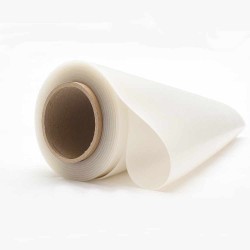
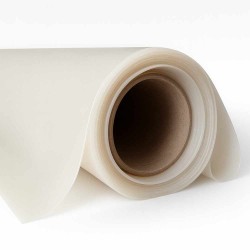
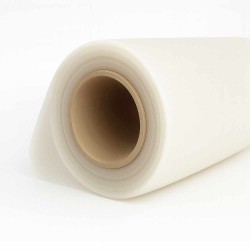
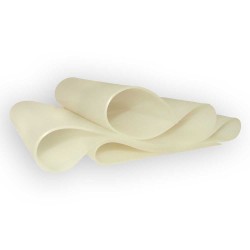
Silicone membranes for vacuum presses are a professional solution for processes that require high heat resistance, stable elasticity, and precise forming of complex parts. Unlike rubber membranes, silicone retains its properties at significantly higher temperatures, making it an indispensable material for thermoforming, PVC pressing, and the processing of composite materials.
In the “Silicone Membranes” category on vacuum-presses.com, you will find industrial-grade membranes designed for vacuum and membrane presses used in furniture manufacturing, woodworking, artificial stone forming, and other technologically demanding industries.
What Is a Silicone Membrane and What Makes It Different
A silicone vacuum membrane is an elastic sheet made from high-temperature silicone that, under the effect of vacuum and pressure, tightly presses the material against a mold or workpiece. The key advantage of silicone lies in its ability to maintain elasticity and stable performance characteristics even during prolonged operation at elevated temperatures.
Silicone does not lose its shape, does not become rigid, and does not degrade as quickly as standard elastomers, which is especially important for serial and repetitive pressing cycles.
Main Applications of Silicone Membranes
Silicone membranes are used in vacuum presses where rubber membranes no longer provide sufficient heat resistance or process stability.
- PVC film pressing at high temperatures;
- Thermoforming of plastics and thermoplastics;
- Forming complex 3D furniture fronts;
- Processing of composite materials;
- Sublimation processes;
- Forming artificial stone and solid surface materials.
Silicone membranes are particularly in demand in production environments where repeatability, geometric precision, and minimal equipment downtime are critical.
Advantages of Silicone Membranes for Vacuum Presses
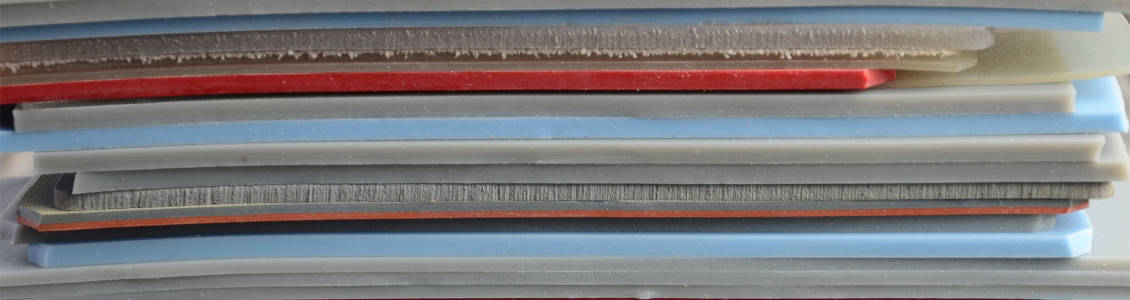
The use of silicone membranes provides a number of technological advantages that directly impact product quality and production efficiency.
- High operating temperature — up to 200–250 °C depending on membrane type;
- Stable elasticity even under intensive use;
- Precise reproduction of complex shapes and deep reliefs;
- Resistance to aging and thermal degradation;
- Long service life when used under correct operating conditions;
- Wide range of applications across multiple industries.
Thanks to these properties, silicone membranes are often chosen for production processes where quality requirements exceed standard levels.
Silicone Membranes for Artificial Stone Processing
One of the key application areas for silicone membranes is the thermoforming of solid surface materials. These membranes are used in the forming and processing of materials such as Corian, Hi-Macs, Staron, Hanex, Kerrock, and other comparable products.
In these processes, stable temperature, uniform pressure distribution, and precise shape replication are essential, making silicone an almost irreplaceable choice.
Use of Silicone Membranes in Woodworking
Although silicone membranes are most commonly associated with high-temperature processes, they are also used in woodworking and furniture production, particularly for complex operations involving deep milling and 3D geometry.
It is important to note that silicone has lower resistance to mechanical damage compared to rubber membranes. Therefore, when used for veneering and lamination, careful handling and correct thickness selection are essential.
How to Choose a Silicone Membrane for a Vacuum Press
The selection of a silicone membrane should be based on the technological requirements of the specific production process and the parameters of the vacuum press.
Key Selection Criteria
- Operating temperature — the primary criterion for silicone membranes;
- Membrane thickness — affects elasticity and service life;
- Dimensions and width — must match the working area of the press;
- Type of operations — PVC, thermoforming, composites, woodworking;
- Production intensity — single orders or serial production cycles.
For complex and high-temperature processes, silicone membranes are the most reliable and efficient solution.
Silicone Membranes in Serial and Industrial Production
In serial production environments, silicone membranes are valued for their predictable behavior, stable performance characteristics, and ability to operate under demanding temperature conditions without frequent replacement.
With the correct membrane selection and adherence to operating recommendations, silicone ensures minimal equipment downtime and consistently high quality of finished products.
Advantages of Silicone Membranes from vacuum-presses.com
We specialize in vacuum technologies and supply silicone membranes selected with real European production conditions and industrial equipment requirements in mind.
- High-temperature industrial-grade silicone membranes;
- Various thicknesses and dimensions for specific press models;
- Compatibility with most vacuum presses;
- Consistent properties from batch to batch;
- Delivery throughout Europe.
We help you select the right silicone membrane for your specific technology, material, and operating conditions — from pilot projects to full-scale industrial production.
Why It Is Important to Buy Silicone Membranes from a Specialized Supplier
A silicone membrane is a high-technology consumable that directly affects the outcome of complex production processes. Incorrect selection or inconsistent quality can lead to defects, unstable results, and increased production costs.
Working with a specialized supplier ensures:
- Professional technical consultation;
- Guaranteed material quality;
- Clear and transparent technical specifications;
- Reliable and stable supply.
At vacuum-presses.com, you can order silicone membranes for vacuum presses with fast delivery and be confident in the stability of every production cycle.