




How to Extend the Lifespan of Your Vacuum Press Membrane: Maintenance Tips and Common Mistakes
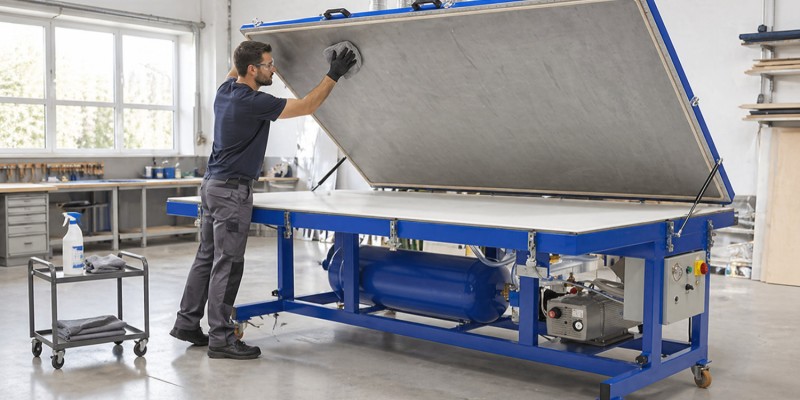
A vacuum press membrane is one of the most important working parts of any vacuum press system. It directly affects pressing quality, surface finish, vacuum stability, and the reliability of daily production. Whether you use a natural rubber membrane for woodworking or a silicone membrane for high-temperature forming, proper care can significantly extend its service life.
Many workshops ask the same question: how long does vacuum membrane last? The answer depends on several factors: membrane material, thickness, working temperature, vacuum level, type of workpieces, press frequency, and maintenance habits. A well-maintained membrane can serve for a long time, while poor handling, sharp edges, overheating, or contamination can quickly reduce its lifespan.
This guide explains the most important vacuum press membrane maintenance practices, common mistakes to avoid, and simple membrane care tips that help keep your vacuum press working efficiently.
Why Vacuum Press Membrane Maintenance Matters
The membrane creates flexible pressure over the workpiece when the vacuum press removes air from the chamber. During every pressing cycle, the membrane stretches, bends, seals, and returns to its original shape. Over time, this repeated mechanical movement naturally causes wear.
However, most premature failures are not caused by normal use alone. They are often caused by:
- sharp workpiece corners;
- glue contamination;
- excessive temperature;
- incorrect vacuum settings;
- poor storage;
- unsuitable membrane material;
- lack of regular inspection.
Good maintenance helps prevent cracks, tears, loss of elasticity, and surface damage. It also reduces downtime, improves pressing consistency, and lowers replacement costs.
How Long Does Vacuum Membrane Last?
There is no single fixed number because different production environments place very different loads on the membrane. A vacuum membrane used occasionally in a small furniture workshop may last much longer than a membrane used daily in industrial production.
The lifespan depends mainly on four factors.
First, the material matters. Natural rubber membranes are flexible and commonly used for veneering, laminating, and woodworking. Silicone membranes are more suitable for applications involving higher temperatures, thermoforming, solid surface shaping, composites, and sublimation.
Second, the thickness and hardness influence durability. Thicker membranes usually resist mechanical damage better, while softer membranes can adapt more easily to complex shapes. Harder membranes may offer better stability for flat panels but may be less flexible around deep profiles.
Third, the working conditions are critical. Temperature, vacuum level, cycle time, glue type, and workpiece shape all affect the membrane.
Fourth, operator habits make a major difference. Careful loading, clean surfaces, rounded edges, and proper inspection can extend the vacuum press rubber membrane lifespan noticeably.
Choose the Right Membrane for the Application
The first step in extending membrane life is choosing the correct membrane type.
For standard woodworking applications such as veneering, laminating MDF panels, cabinet doors, and flat components, a natural rubber membrane is often an excellent choice. It offers strong elasticity and good pressure distribution.
For high-temperature applications, silicone membranes are usually the better option. They are commonly used for solid surface forming, thermoplastics, composites, acrylic materials, and processes where heat resistance is required.
Using the wrong membrane can shorten its life. For example, a natural rubber membrane used regularly at temperatures beyond its recommended range may lose elasticity faster. A very soft membrane used on sharp or rough components may be damaged more easily. A membrane that is too thin for heavy-duty production may tear sooner.
Before selecting a membrane, consider:
- maximum working temperature;
- shape complexity;
- type of material being pressed;
- frequency of use;
- required elasticity;
- thickness and Shore hardness;
- surface finish requirements.
Correct selection is not only a technical decision. It is also one of the most effective maintenance strategies.
Inspect the Membrane Regularly
Regular inspection is one of the simplest and most effective membrane care tips.
Before starting work, check the membrane surface for small cuts, cracks, bubbles, dents, glue spots, or areas with reduced elasticity. Pay special attention to zones that stretch the most during pressing, especially around corners, edges, and deep profiles.
Small damage can quickly become serious if ignored. A tiny cut can expand during vacuum cycles. A hardened glue spot can create a weak point. A worn area can reduce vacuum stability and pressing quality.
A simple inspection routine should include:
- checking the top surface;
- checking the underside of the membrane;
- inspecting the clamping area;
- looking for glue residue;
- checking for uneven stretching;
- listening for vacuum leaks during operation.
If the vacuum press takes longer than usual to reach vacuum, or if the pump cycles more frequently than normal, the membrane may have a leak or sealing issue.
Keep the Membrane Clean
Cleanliness has a direct effect on membrane life. Dust, wood chips, glue particles, hardened resin, and sharp debris can damage the membrane during pressing.
Always clean the press table before placing the workpiece. Even a small chip trapped under pressure can leave a mark or create a puncture point. This is especially important when pressing thin veneers, delicate surfaces, or shaped parts.
After each working session, remove glue residue and dust from the membrane. Use a soft cloth and a cleaning method suitable for the membrane material. Avoid aggressive solvents unless they are confirmed to be safe for the specific rubber or silicone compound.
Never scrape the membrane with knives, metal tools, chisels, or abrasive pads. Hardened glue should be softened carefully or removed using a safe method that does not damage the surface.
A clean membrane stretches more evenly, seals better, and lasts longer.
Avoid Sharp Edges and Corners
Sharp workpiece edges are one of the most common causes of membrane damage.
When the vacuum is applied, the membrane is pulled tightly over the part. If the part has sharp corners, burrs, screw heads, staples, or rough edges, the membrane may be cut or overstressed.
Before pressing, check the workpiece carefully. Round or soften sharp edges where possible. Remove loose splinters, nails, metal fragments, and hard particles. If the shape is aggressive or has a high risk of cutting the membrane, use protective layers or suitable release materials between the workpiece and the membrane.
This is especially important for:
- routed MDF profiles;
- solid wood parts;
- composite molds;
- sharp laminate edges;
- thermoforming molds;
- parts with deep recesses;
- experimental workpieces.
A few minutes of preparation can prevent expensive membrane replacement.
Control Temperature Carefully
Temperature is one of the most important factors in vacuum press membrane maintenance.
Every membrane material has a recommended working temperature range. Natural rubber and silicone behave differently under heat. Silicone membranes are generally used for higher-temperature applications, while natural rubber membranes are mainly used for woodworking and lower-temperature pressing.
Excessive heat can cause the membrane to harden, lose elasticity, become brittle, or deform. In some cases, overheating may not destroy the membrane immediately, but it can reduce its service life over time.
To avoid temperature-related damage:
- follow the recommended temperature range;
- avoid direct contact with overheated surfaces;
- allow hot molds or materials to cool if necessary;
- do not exceed the safe cycle time;
- check temperature distribution across the press;
- avoid localized overheating.
If you often work with heated processes, choose a silicone membrane designed for the required temperature range.
Use Correct Vacuum Settings
More vacuum is not always better.
Excessive vacuum force can overstretch the membrane, especially on complex shapes or deep molds. This can lead to fatigue, thinning, and premature tearing. The correct vacuum level depends on the application, material, glue, shape, and press design.
For flat veneering, the membrane usually does not need extreme stretching. For 3D forming or deep shapes, the membrane must stretch more, so controlled vacuum and proper support are especially important.
Use stable vacuum settings and avoid unnecessary pressure shocks. If the system has automatic start and stop control, check that the stop and restart points are set correctly. A stable vacuum system reduces stress on both the membrane and the vacuum pump.
Vacuum leaks also create problems. If the system cannot hold vacuum, the pump may run more often, and the membrane may experience repeated load cycles. Check seals, hoses, fittings, valves, and the membrane itself.
Store the Membrane Properly
If you keep replacement membranes in stock, storage conditions matter.
Membranes should be stored in a clean, dry place away from direct sunlight, ozone sources, oils, solvents, and sharp objects. They should not be folded sharply or compressed under heavy loads for long periods.
Poor storage can cause deformation, surface cracking, discoloration, or loss of elasticity before the membrane is even installed.
Good storage practice includes:
- keeping the membrane rolled, not sharply folded;
- storing it at moderate room temperature;
- protecting it from UV light;
- avoiding contact with oils and chemicals;
- keeping it away from motors or electrical equipment that may generate ozone;
- preventing mechanical pressure marks.
Correct storage is especially important when buying large membranes or keeping special sizes for future use.
Common Mistakes That Shorten Membrane Life
Many membrane failures are caused by avoidable mistakes. The most common ones include using the wrong membrane type, pressing parts with sharp edges, ignoring glue residue, overheating the membrane, using aggressive solvents, and continuing production after visible damage appears.
Another common mistake is treating all membranes the same. Natural rubber and silicone membranes have different properties. They require different application choices and different care habits.
Workshops also sometimes wait too long before replacing a damaged membrane. A worn membrane can cause poor pressing quality, vacuum loss, visible marks on the product, and production delays. Replacing it at the right time is often cheaper than losing finished parts.
When Should You Replace the Membrane?
A membrane should be replaced when it can no longer provide reliable vacuum, even pressure, or safe operation.
Typical signs include:
- visible cracks;
- repeated vacuum leaks;
- tears or punctures;
- permanent deformation;
- hard or brittle areas;
- loss of elasticity;
- uneven surface marks;
- poor pressing results.
If the membrane requires frequent repairs or causes unstable production, replacement is usually the better solution.
Final Maintenance Checklist
To extend the lifespan of your vacuum press membrane, follow a simple routine:
- select the correct membrane for the application;
- keep the press table clean;
- remove glue and dust regularly;
- avoid sharp edges and rough workpieces;
- control temperature carefully;
- use correct vacuum settings;
- inspect the membrane before production;
- store spare membranes correctly;
- replace damaged membranes before they affect production quality.
Good vacuum press membrane maintenance does not require complicated procedures. It requires consistency, clean working habits, and the right membrane for the job.
A well-cared-for membrane improves pressing quality, reduces downtime, protects the vacuum system, and helps your workshop achieve stable, professional results cycle after cycle.