




How to Choose the Right Vacuum Pump for a Membrane Press: Capacity, Power, and Setup
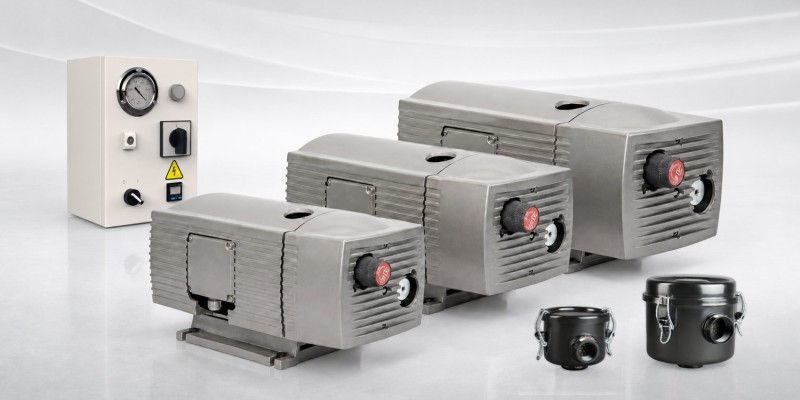
Choosing the right vacuum pump for membrane press applications is one of the most important decisions when building, upgrading, or maintaining a vacuum pressing system. The pump directly affects vacuum speed, holding stability, production reliability, energy consumption, and the final quality of veneering, laminating, and forming work.
Many workshops focus first on the press table size, membrane material, or heating system, but the vacuum pump is the heart of the whole installation. If the pump is too weak, the membrane may take too long to pull down, air pockets can remain under the workpiece, and production becomes slow. If the pump is unnecessarily oversized, the system may become more expensive, louder, and less efficient than needed.
This guide explains how to choose vacuum pump capacity, what m3/h means in practical vacuum pressing, why the final vacuum level is important, and how to set up a reliable pump system with proper filtration, control, and vacuum receiver support.
What Does a Vacuum Pump Do in a Membrane Press?
In a membrane press, the vacuum pump removes air from the working chamber, vacuum bag, or pressing table area. As the air is evacuated, atmospheric pressure pushes the flexible membrane against the workpiece. This creates even pressure over flat or shaped surfaces without the need for mechanical clamps across the whole area.
The pump has two main tasks. First, it must evacuate the air quickly enough so the membrane closes properly around the workpiece. Second, it must maintain a stable vacuum level during the pressing cycle, compensating for small leaks, material porosity, hose volume, fittings, and the natural behavior of the membrane system.
For professional results, the system needs not only a good vacuum pump, but also proper hoses, filters, control valves, a vacuum gauge, a vacuum receiver, and often an automatic start-stop control unit. The pump alone does not guarantee good pressing quality if the rest of the setup is poorly designed.
Understanding Vacuum Pump Capacity in Woodworking
The term vacuum pump capacity woodworking usually refers to how much air the pump can move in a given time. In Europe, this is commonly shown in cubic meters per hour, or m3/h. For example, a pump rated at 4 m3/h can move about four cubic meters of air per hour under specified conditions.
However, this number should not be understood as the only performance indicator. A pump with a higher capacity will usually evacuate the system faster, but the final vacuum level, pump type, system tightness, and press volume are also important. Two pumps with similar m3/h ratings may behave differently depending on their technology and condition.
For membrane pressing, capacity affects how quickly the membrane pulls down over the workpiece. This is especially important when working with large press tables, deep shapes, porous materials, or vacuum bags with a large internal volume.
What Does m3/h Mean for a Vacuum Press?
The keyword m3/h vacuum press is often searched by users trying to match pump size with their press. In simple terms, m3/h tells you how quickly the pump can remove air from the system. A small press or vacuum bag does not require the same pump capacity as a large membrane press used for full-size panels.
For small vacuum bags and compact veneering work, a lower-capacity pump may be sufficient. For medium and large membrane presses, a stronger pump reduces waiting time and improves production flow. The larger the press volume and the more frequent the cycles, the more important pump capacity becomes.
It is also important to remember that a vacuum press does not need only “fast evacuation.” It needs stable vacuum during the whole pressing cycle. A system with small leaks may force the pump to start frequently. In that case, an automatic vacuum station with a receiver and start-stop control can be more efficient than a simple pump connected directly to the press.
Vacuum Level: One of the Most Important Pump Parameters
When choosing a vacuum pump for membrane press work, the final vacuum level is just as important as air capacity. Capacity shows how fast the pump can remove air, while the vacuum level shows how deep the vacuum can become. This directly affects the pressing force applied by the membrane.
For many woodworking and membrane pressing applications, dry-running rotary vane pumps are widely used because they are clean, reliable, and simple to maintain. A typical dry vacuum pump can usually reach a vacuum level of around -0.85 bar. This is suitable for most veneering, laminating, vacuum bagging, and general membrane press work.
Oil-lubricated vacuum pumps can usually reach a deeper vacuum level, often up to around -0.99 bar depending on the pump model and system design. This can be useful when maximum vacuum force is required, but oil pumps also require more maintenance, oil control, and exhaust management.
The higher the vacuum level, the greater the theoretical pressing force. However, in real production, the best choice is not always the pump with the deepest vacuum. The right solution depends on the material, press size, sealing quality, cycle time, maintenance requirements, and whether the process really needs very high vacuum.
Dry Vacuum Pumps vs. Oil-Lubricated Vacuum Pumps
Dry-running vacuum pumps are often the preferred choice for woodworking workshops because they do not use oil in the compression chamber. This makes them cleaner, easier to install, and easier to maintain. For membrane presses used in veneering, laminating, and furniture production, a dry pump with a vacuum level of about -0.85 bar is often a practical and reliable solution.
Oil-lubricated pumps can provide a deeper vacuum, commonly up to about -0.99 bar. They are suitable for applications where a stronger vacuum level is required, but they need regular oil checks, oil changes, proper exhaust handling, and more careful maintenance. For some workshops, this additional maintenance is acceptable; for others, a dry pump is the better everyday choice.
When comparing dry and oil-lubricated pumps, do not look only at the final vacuum level. Also compare reliability, service intervals, noise, heat, air capacity, spare parts, and how easy the pump is to protect from dust, glue particles, and moisture.
Why the Vacuum Receiver Is an Important Part of the System
A vacuum receiver is one of the most important components in a professional vacuum system. It is not just an accessory; it helps the whole system work more smoothly and reliably. The receiver is a vacuum tank that stores reserve vacuum volume and supports stable pump operation.
In an automatic start-stop system, the receiver helps prevent the pump from switching on and off too frequently. When the target vacuum level is reached, the pump stops. If the vacuum level slowly drops because of small leaks or material behavior, the receiver helps buffer these changes before the pump needs to start again.
This makes the system more stable, reduces short cycling, lowers pump wear, reduces noise, and improves energy efficiency. Without a receiver, even a small pressure drop can cause the pump to restart too often, especially in systems with larger hoses, larger press volumes, or small natural leakage.
The receiver can also work as a vacuum accumulator. This means it stores a reserve of vacuum that can be used when the system needs a fast response. For example, when the press starts a new cycle or when the membrane needs to pull down quickly, the stored vacuum reserve can support the pump and improve system reaction.
For professional membrane presses and regular production, a vacuum station with pump, receiver, filter, gauge, and automatic control is usually more effective than a standalone pump connected directly to the press.
Small Workshops and Occasional Veneering
For small woodworking workshops, hobby production, repair work, and occasional veneering, a compact dry-running vacuum pump can be enough. These applications usually involve smaller vacuum bags, individual parts, or limited press sizes.
In this type of setup, the most important requirements are reliability, simple operation, stable vacuum, and good final vacuum level. The pump does not always need very high capacity, because production speed is not the main priority. A capacity around the lower professional range can be suitable when the vacuum volume is small and the system is tight.
For small veneering projects, furniture components, curved panels, and experimental work, the pump should still be strong enough to reach the required vacuum level without struggling. A weak pump may work on paper, but in real workshop conditions it can become slow, hot, and unreliable.
Medium Workshops and Regular Production
Medium-sized furniture workshops usually need a more balanced solution. The press may be used daily for veneering, laminating, curved panels, cabinet doors, or shaped components. In this case, pump capacity becomes more important because every pressing cycle affects production time.
A medium vacuum pump or vacuum station can reduce evacuation time and keep the process stable even when the press is used several times per day. For this type of work, a dry rotary vane pump is a common professional choice because it is clean, reliable, and suitable for woodworking environments when properly protected with a filter.
A vacuum receiver is especially useful in regular production. It stores vacuum reserve and helps the system react more smoothly to small pressure changes. Instead of switching the pump on and off constantly, the receiver and automatic control system help maintain a more stable operating range.
Large Membrane Presses and Industrial Use
Large membrane presses require more attention to pump sizing. The larger the press table, the membrane area, and the internal air volume, the more air must be removed before pressing pressure is achieved. If the pump is too small, the membrane will close slowly, production will be inefficient, and the press may not perform consistently.
Industrial users should consider not only the size of the press, but also cycle frequency, material type, process temperature, required vacuum level, and whether the system needs a dry or oil-lubricated pump. Thermoforming, solid surface shaping, composite work, and high-volume laminating may place higher demands on the vacuum system than simple flat veneering.
For larger presses, it is often better to use a complete vacuum station rather than only a standalone pump. A vacuum station can include a pump, receiver, filter, vacuum gauge, non-return valve, vacuum switch, and automatic start-stop control. This makes the system easier to operate and protects the pump from unnecessary running time.
Final Vacuum Level: Capacity Is Not Everything
When choosing a vacuum pump, users often compare only m3/h. This is a mistake. Capacity tells you how fast the pump moves air, but it does not fully describe how deep the vacuum can go.
For membrane pressing, the final vacuum level is critical because it defines the available pressing force. A dry-running pump is often suitable for many professional membrane press applications with a vacuum level around -0.85 bar. An oil-lubricated pump can reach deeper vacuum levels, often around -0.99 bar, but requires more maintenance and careful operation.
A pump with high air capacity but poor final vacuum may evacuate quickly but not provide enough pressing force. A pump with lower capacity but good final vacuum may work well for small systems but become too slow for larger press tables. The best choice is a balance between capacity, final vacuum, durability, maintenance, and setup quality.
Why Hose Diameter and Layout Matter
Even a good pump can perform poorly if the hose system is too narrow or badly arranged. Long hoses, small internal diameters, sharp bends, and leaking fittings restrict airflow. This slows down evacuation and makes the pump work harder.
For membrane presses, the hose diameter should match the pump and press connection. A larger press should not be connected through a very small hose unless the system is designed for that purpose. The goal is to allow air to move freely from the press to the pump with minimal resistance.
Use proper vacuum-rated hoses, secure fittings, and reliable clamps. Avoid soft hoses that collapse under vacuum. Also check valves, seals, and connectors regularly, because small leaks can cause long evacuation times and frequent pump restarts.
Filtration and Pump Protection
Whatever pump type is selected, filtration is essential. Wood dust, glue particles, moisture, and small debris can damage the pump over time. A good vacuum filter placed before the pump helps protect the vanes, internal components, and control valves.
This is especially important in woodworking environments, where fine dust and particles are always present. Even a small amount of contamination can reduce pump performance or shorten service life. A filter is a simple component, but it plays a major role in the reliability of the complete vacuum system.
Automatic Vacuum Control and Receiver Setup
An automatic vacuum control system improves usability and protects the pump. Instead of running continuously, the pump starts when vacuum drops below the restart point and stops when the target vacuum level is reached.
This is especially useful in production environments where the press may hold vacuum for a long time. The pump does not need to run constantly if the system is tight. This reduces noise, heat, electricity consumption, and wear.
A vacuum receiver makes the system smoother. It creates a reserve volume and reduces short start-stop cycles. For many professional workshops, a vacuum station with receiver and automatic control is a better long-term solution than a simple direct pump connection.
The receiver also acts as a vacuum accumulator. It stores a reserve of vacuum and helps the system respond faster and more evenly during operation. This is important for stable start-stop control, smoother pressure regulation, and more consistent membrane pressing results.
Common Mistakes When Choosing a Vacuum Pump
One common mistake is choosing the cheapest pump without checking its real vacuum performance. Another mistake is selecting a pump only by m3/h without considering final vacuum level, duty cycle, noise, service requirements, receiver volume, and system tightness.
Some users also underestimate the importance of filters, hoses, and the vacuum receiver. A high-quality pump connected through poor fittings, dusty lines, and without reserve vacuum volume will not give stable results. Others oversize the pump too much, paying for capacity they do not need while still having leaks or control problems in the system.
The best approach is to evaluate the whole vacuum system: press size, membrane type, workpiece shape, production frequency, hose length, filter protection, vacuum level, receiver size, and control method. The pump should be selected as part of a complete setup, not as an isolated component.
Practical Selection Guide
For small vacuum bags and occasional veneering, choose a compact, reliable pump with good final vacuum and simple filtration. A dry-running pump with a vacuum level around -0.85 bar is often suitable for this type of work.
For small to medium membrane presses, select a pump with enough capacity to evacuate the working area quickly and maintain vacuum without excessive running time. In many cases, a dry pump combined with a receiver and automatic start-stop control gives a practical and efficient setup.
For regular production, consider a vacuum station with automatic start-stop control and a vacuum receiver. For large membrane presses, industrial laminating, or frequent cycles, choose a higher-capacity pump system with a receiver, strong filter protection, proper hose diameter, and stable vacuum control.
If the application requires maximum vacuum force, an oil-lubricated pump with a vacuum level up to around -0.99 bar may be considered. However, it should be selected with full understanding of its maintenance requirements, oil management, and operating conditions.
If the press is used for demanding applications such as curved panels, thick veneers, solid surface forming, or thermoforming, it is better to choose a more robust system from the beginning. Upgrading later is possible, but a correctly sized vacuum system saves time and improves pressing quality from the first cycle.
Conclusion
The right vacuum pump for membrane press work depends on more than one number. Capacity in m3/h is important, but it must be evaluated together with final vacuum level, press size, production frequency, hose layout, filtration, receiver volume, and control setup.
A small workshop may need a compact and reliable dry pump. A professional furniture producer may benefit from a complete vacuum station with receiver and automatic control. A large industrial membrane press requires a carefully sized system that can evacuate quickly, maintain stable vacuum, and support consistent start-stop operation.
When choosing a vacuum pump, think about the complete process: how fast the press must close, how deep the vacuum must be, how long it must hold vacuum, how often it will run, and how well the system is protected. A properly selected pump, combined with a suitable vacuum receiver and control system, improves productivity, extends equipment life, and helps achieve consistent pressing results in woodworking, veneering, laminating, and membrane press applications.