




Silicone vs Natural Rubber Membrane: How to Choose the Right Vacuum Press Membrane
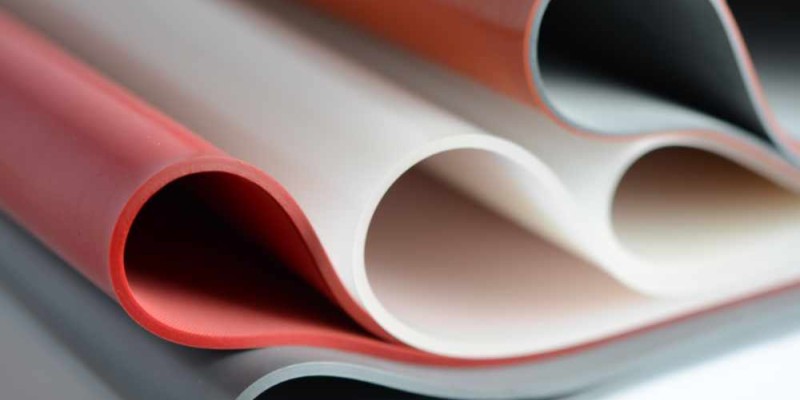
Choosing a vacuum press membrane is a strategic decision that directly affects product quality, process stability, equipment lifespan, and overall production costs.
Many manufacturers, when choosing between a silicone membrane and a rubber membrane, focus exclusively on the initial cost. However, in industrial practice the key factors are:
- process operating temperature,
- resistance to mechanical loads,
- elasticity stability,
- resistance to tensile and tear forces,
- durability under cyclic operation.
In this guide we will подробно examine the technical differences between silicone and rubber membranes, their application areas, and the criteria for selecting the correct solution for your production.
What is a vacuum press membrane
A vacuum press membrane is an elastic sheet made of silicone or natural rubber installed in the upper part of the vacuum chamber. When vacuum is created inside the chamber, the membrane under atmospheric pressure evenly presses the facing material onto the surface of the workpiece.
- The key function of the membrane is to ensure:
- uniform pressure distribution,
- precise reproduction of the part geometry,
- stable pressing quality,
- absence of air pockets,
- in the case of PVC foil pressing, transfer the generated heat to the facing material.
- Membranes are used in:
- woodworking,
- furniture manufacturing,
- plastic thermoforming,
- artificial stone forming,
- composite material processing,
- sublimation processes.
Main technical characteristics of membranes
Before comparing silicone and rubber, it is important to understand the key parameters.
Shore A hardness
The hardness parameter determines how soft the material is and indirectly affects the ability of the membrane to reproduce the shape of the part. It is measured on the Shore A scale using a durometer.
| Typical hardness values of membranes for vacuum presses: | ||
|---|---|---|
| Shore A | Characteristic | Application |
| 30A | Very soft | Complex high profiles |
| 40A | Universal | Optimal balance |
| 45A | Medium | Increased strength |
| 50A | Moderately rigid | Dynamic loads |
| 55A | Rigid | Presses with excessive pressure |
The most commonly used range: 40–55 Shore A.
Elasticity and elongation at break
Elasticity is the ability of a material to stretch and return to its original shape. Elongation at break is the maximum extent to which the membrane can stretch before breaking. It is measured in percent.
Typical values for membranes: 500–800%.
Relationship with hardness:
- lower Shore → higher elongation
- higher Shore → better shape retention
Important: identical hardness does not guarantee identical elasticity — much depends on the compound formulation and manufacturing technology.
Tensile strength
- Shows the maximum load during stretching until the material breaks. Measured in MPa (1 MPa = 1 N/mm²).
Typical values:
- Silicone: 7–12 MPa
- Natural rubber: 15–20 MPa
According to this parameter, a rubber membrane significantly exceeds a silicone membrane.
Tear strength
One of the most important parameters in real operation. It shows the resistance to the propagation of an existing tear or cut. Measured in N/mm.
Typical values:
- Silicone: 20–25 N/mm
- Rubber: up to 60 N/mm
With sharp edges, complex part geometries and intensive cyclic operation this parameter becomes critical.
Operating temperature and heat resistance
Operating temperature (continuous operation)
- Silicone (transparent): −45°C to +200°C
- Silicone (red, high-temperature grade): up to +250°C
- Rubber: −25°C to +120–130°C
Short-term heat resistance
- Silicone: up to +220–260°C
- Rubber: up to +130°C
Exceeding the permissible temperature leads to:
- accelerated aging,
- loss of elasticity,
- formation of microcracks,
- reduced service life.
If the process regularly exceeds 130°C — the choice is practically obvious: silicone.
Silicone membrane
Main advantages
-
High heat resistance
- Suitable for:
- woodworking,
- acrylic forming (solid surface),
- composite thermoforming,
- PVC foil pressing,
- sublimation (230–250°C).
- Property stability under heat
- Silicone maintains elasticity even during prolonged operation at high temperatures.
- Resistance to aging and UV
- Does not crack and does not become brittle over time.
-
Chemical resistance
- Resistant to:
- adhesives
- resins
- antifreeze
- cleaning agents
Limitation
Lower mechanical strength compared to natural rubber.
Rubber membrane
Main advantages
- High mechanical strength
- Better indicators in tensile strength and tear resistance.
Ideal for intensive woodworking.
-
Lower cost
30–40% cheaper than silicone alternatives.
-
Excellent elasticity
Up to 700% elongation at break.
-
Suitable for medium-temperature processes and optimal for:
- veneering,
- plywood lamination,
- laminating CPL / HPL plastics,
- production of bent-laminated parts,
- cold pressing,
- PVC up to 130°C.
Limitation
Not suitable for high-temperature processes and forming of acrylics and composites.
Comparison of silicone and rubber membranes
| Parameter | Rubber | Silicone |
|---|---|---|
| Operating temperature | up to 130°C | up to 250°C |
| Elasticity | ~700% | up to 800% |
| Tensile strength | 15–20 MPa | 7–12 MPa |
| Tear strength | up to 60 N/mm | 20–25 N/mm |
| UV resistance | Medium | High |
| Transparency | No | Possible |
How to choose a membrane for your vacuum press or production
Choose a rubber membrane if:
- process temperature is up to 130°C,
- you mainly work with wood,
- high resistance to mechanical damage is important,
- budget is limited
Choose a silicone membrane if:
- the process exceeds 130°C,
- you form composites or artificial stone,
- versatility is important,
- stability during heating is required,
- sublimation is used.
Practical recommendations
- Always consider the maximum temperature, not the average.
- Evaluate the shape of the parts — complex relief requires high elasticity.
- Check tear strength indicators when working with sharp edges.
- Request real laboratory data from the manufacturer (ISO / ASTM / DIN).
- A low-quality membrane can lead to defects, equipment downtime and additional costs.
Conclusion
A silicone membrane is a universal solution for modern vacuum presses.
A rubber membrane is a strong and economical choice for traditional woodworking.
The correct choice always depends on:
- process temperature
- type of materials
- shape of the parts
- operation intensity
If you are not sure which membrane is suitable for your equipment or technological process, our team will help select the optimal option considering the parameters of your press and production tasks.